
Introduction
Owners, managers and occupiers of commercial properties have a critical responsibility to ensure the safety of the structure in the event of a fire. Fire watching services could be necessary for buildings like offices, shopping centres, warehouses, hotels, and industrial facilities where normal fire protection systems are not available or special operations in the building may pose an increased fire risk. Property owners can better ensure their property is in a safer state and understand how to deal with emergencies if they know what fire watch requirements are.
Understanding local regulations is an important part of arranging effective fire watch coverage for a commercial property. Property owners and managers should review applicable fire watch requirements Alaska regulations and consider factors such as the type of facility, current fire hazards, occupancy, and the condition of fire protection systems. Having qualified personnel who understand these requirements can help ensure that monitoring is carried out properly and that potential fire risks are addressed before they develop into more serious emergencies.
What is a Fire Watch?
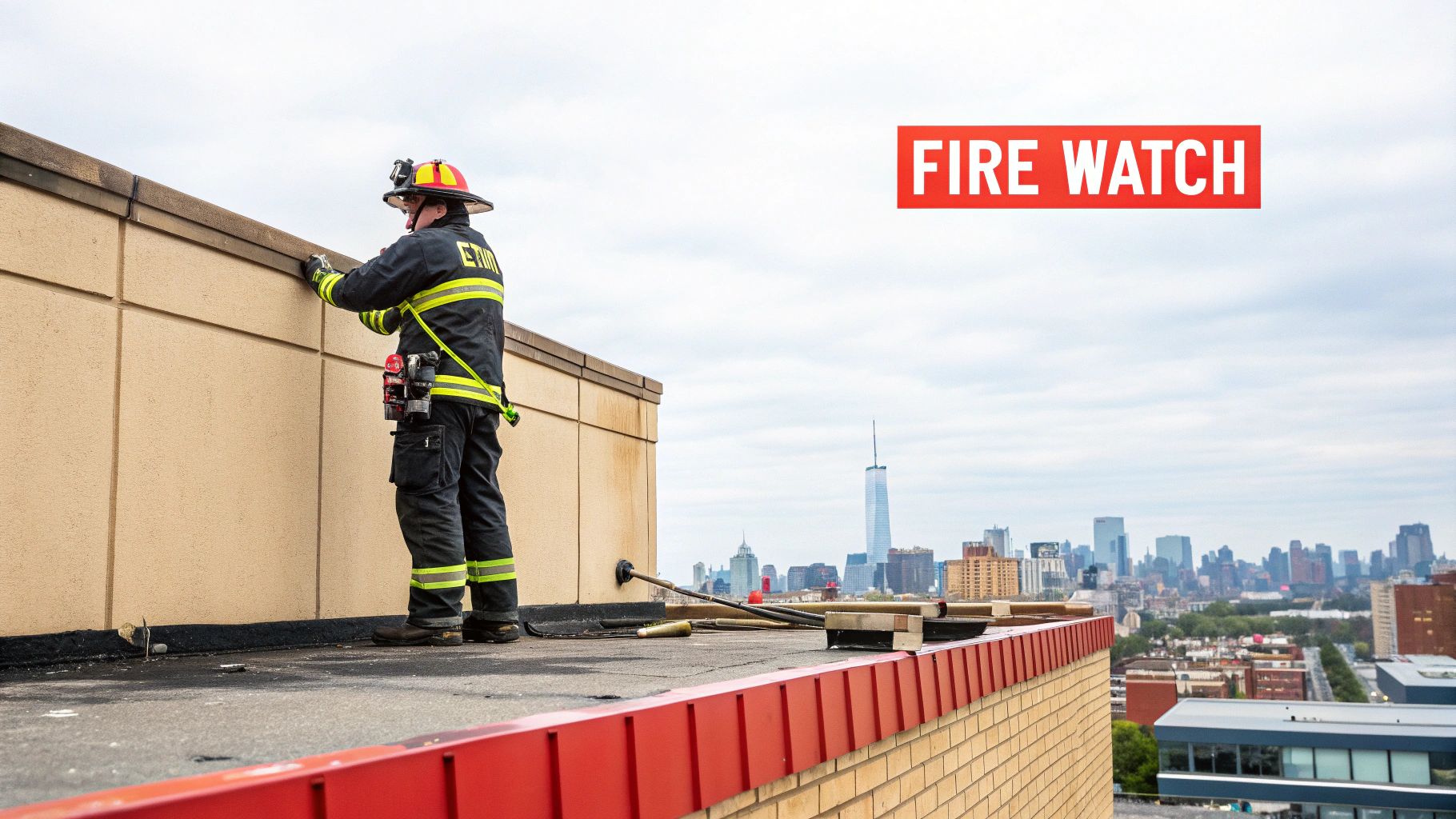
Fire watch is a provisional safety measure where trained people are assigned to the property to keep an eye out for fire or dangerous situations. Fire watch guards regularly patrol, identify potential hazards, and take fire emergency procedures when needed. They are particularly valuable when automatic fire protection systems are unable to offer protection at their usual level.
When is fire watch needed?
Depending on the local fire codes and fire situation, building situation, occupancy type and circumstances that present the fire risk, different fire watch requirements may be in place. Fire alarm systems, sprinkler systems, fire pumps, or other protective equipment may be impaired or being maintained and a fire watch may be required during this time. Sparking and hot work (such as welding, cutting and grinding) can also involve fire watch attendance if combustible materials are potentially involved. A change in the conditions for fire monitoring may result from construction, renovations or temporary alterations to the operation of buildings.
The duties of Fire Watch Personnel.
Fire watch guards are not intended to sit and wait in assigned areas. They may make regular surveillance visits, check high-risk areas, locate flammable materials and make sure that emergency exits and access routes are kept clear. When a fire or dangerous situation is found, staff should carry out fire procedures, alert responsible staff members, ring any alarm which is available, call emergency services where necessary, and assist in evacuating.
Importance of Documentation
Accurate records should be kept of fire watch activities for commercial properties. Documentation can include patrol times, areas patrolled, hazards that were found, incidents, measures taken, communication with property management, etc. Detailed records will help to show that appropriate monitoring procedures were followed and will give information for subsequent safety performance review.
Property Manager Responsibilities
Property managers need to be aware of the situations that require fire watch and should work with qualified professionals as needed. They should make sure people are given clear instructions, access to relevant areas, reliable means of communication and knowledge of emergency procedures. Managers should then act promptly to solve the problem that is leading to the need for fire watch, especially if a fire protection system is not operating.
The selection of Professional Fire Watch Services
Commercial property owners assessing the providers to hire must take into account the employee training, experience, employee availability, supervision, communication, and documentation aspects of the fire watch provider. Providers need to be aware of the special risks of the premises and be able to cover consistently.
Conclusion
It is important to know what is required for fire watch in commercial properties. When a fire safety system doesn’t work or there are other risks, fire watch personnel offer an important temporary layer of protection. Property managers can enhance fire prevention and emergency preparedness by adhering to applicable requirements, proper documentation, and trained professionals.
