
We often take commercial roofing for granted until everything looks good. When it does, we often take it for granted. Unfortunately, minor roof repairs don’t always stay minor. A loose seam, a blocked drain, a small puncture can lead to water infiltration, wet insulation, interior repairs and business interruption.
A commercial roof maintenance program helps protect your investment from these problems with regular cleaning, inspections and repair of potential hazards before changing weather takes advantage of them.
Why Is Commercial Roof Maintenance Important?
Commercial roofs are constantly under exposure to the elements. They’re frequently large, low-slope roofing systems that can be subject to the sun, wind, rain, debris, changing temperatures and foot traffic from repairmen. Over time, this exposure will weaken the system and leave holes where water can enter the building.
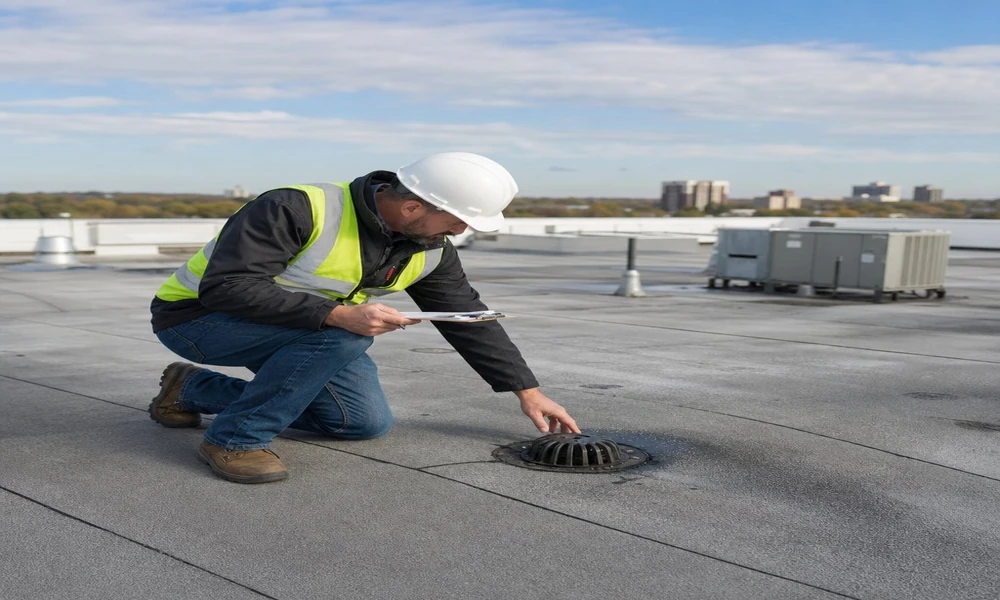
commercial roof inspection on a low slope building
Roof maintenance is an important tool to help understand when the roof needs repair before it becomes costly. Regular maintenance also extends the roof’s life, helps prevent emergency repairs and helps meet warranty requirements.
Maintaining your commercial roof helps to protect your equipment, inventory, tenants and staff as well.
What Should a Commercial Roof Maintenance Visit Include?
A good commercial roof maintenance plan is one that’s consistent and documented. All roofing systems are different but, with few exceptions, a maintenance visit should have three components: inspection, clean up and addressing smaller problems before they become major ones.
Maintenance visits should typically include:
- Inspecting seams, flashings and penetrations
- Clearing clogs and blockages from drains, gutters and scuppers
- Cleaning up leaves, branches and other loose materials
- Checking for signs of wear around rooftop machinery
- Checking for signs of ponding water or soft spots
- Looking for cracks, punctures, blisters and open seams
- Documenting roof condition through written reports, digital photos or both
Not only should a commercial roof maintenance plan identify an active leak but, more importantly, it helps identify potential weak areas before water makes its way into the building.
How Often Should Your Commercial Roof be Inspected?
Typically, commercial roofing systems should be inspected a minimum of twice a year, usually in spring and fall. A spring inspection lets you know if there was any winter damage and the fall inspection can help prepare your roof for heavy rain, snow, wind and cold temperatures.
A thorough check after significant weather events (as you can see at www.weather.gov/safety), like high winds, hail and heavy rain, is also a smart strategy because your roof can be damaged without any immediate evidence from the inside.
Older roofs, roofs with significant foot traffic, and roofs with a high volume of rooftop machinery may require additional commercial roof maintenance.
What Can Be Identified by Commercial Roof Maintenance?
Commercial roofing failures usually begin quietly. A small open seam on a pipe, a loose bit of sealant or a blocked scupper might not lead to any visible damage immediately but a regular commercial roof maintenance inspection helps identify these smaller problems before they turn into a crisis.
Common problems include membrane punctures, deteriorated flashings, blocked drain systems, ponding water, edge metal and roof wear around HVAC units. Look for signs of water damage as well. Water-stained ceiling tiles, musty odors or moisture you cannot identify may be the results of a developing roof problem.
Don’t Forget Drainage
Drainage can be one of the most overlooked aspects of commercial roof maintenance. Commercial, low-slope roofing systems – you can read more on this useful site, are designed to channel the water down into your drain, gutter, scupper or drain piping system. When these outlets aren’t flowing properly, the water may linger on your roof for hours or even days, depending on weather conditions.
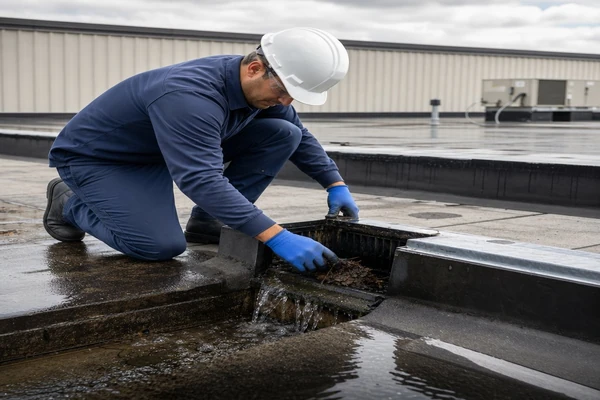
commercial roof drainage and scupper maintenance
Ponding water increases weight, causes more deterioration, and creates a higher possibility of leaks. Keeping gutters, drains, scuppers and piping systems clear and free flowing are easy maintenance items that can have huge benefits when looking out for your roof.
Keep your Roof on Schedule
Commercial roof maintenance is a practical approach to protect your building while helping to control long term costs. Through regular commercial roof inspections, clearing drainage, and fixing smaller problems promptly, your commercial roofing can help you avoid costly repairs and prevent disruption to your operations.
In addition, a roof access log, designated walkway paths and requiring trades to report damage helps limit who is on the roof and the work being done.
HVAC technicians, electricians and other trades can accidentally damage the membrane when moving tools or equipment or installing replacement parts. Having a simple roof access log, using a designated walk path and requiring contractors to report any damage can prevent mystery leaks in the future. During any larger equipment work, some temporary protection can also help protect the roof surface.
