
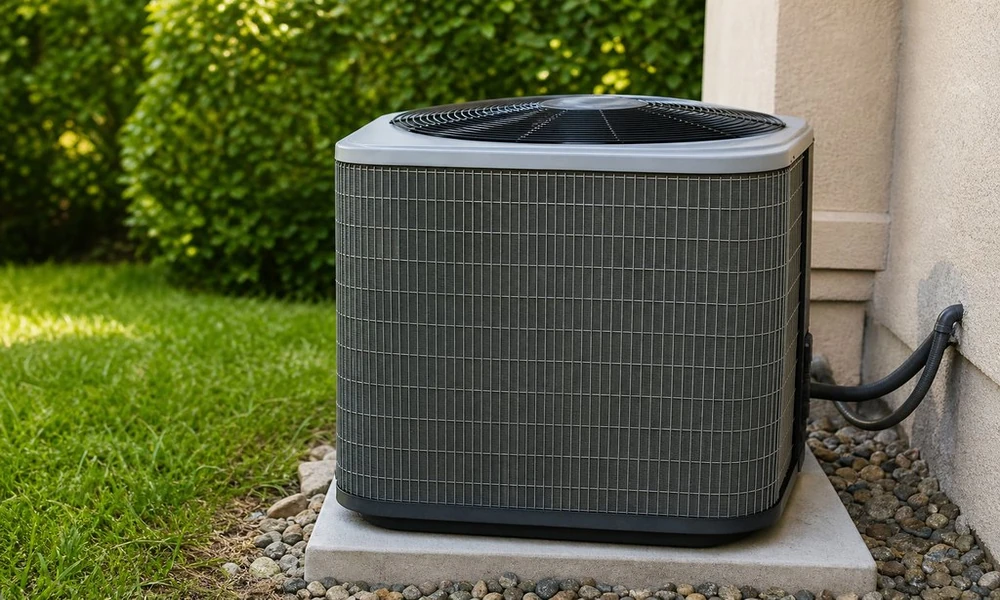
When air-conditioning problems point to an outdoor condenser coil that may need replacement, homeowners may feel confused as to whether or not that’s really true. Coil replacement isn’t exactly minor maintenance, and the job may entail more work than most people would realize. However, condenser coil replacement is a part of AC repair that makes sense in some situations, and it is important for homeowners to learn a bit more about this component and repair job.
The Outdoor Coil’s Role
In split air-conditioning systems, the AC condensing coil surrounds the outside portion, while heat is also absorbed indoors. This coil consists of a system of metal tubing and thin fins, which play an important role in the transfer of heat during the air-conditioning process. Once refrigerant has been compressed into a high-pressure gas, it flows into this coil where its heat is transferred to the air flowing across the condenser coil and out into the atmosphere. As a result, the refrigerant cools and changes back into a liquid.
Without this efficient transfer of heat, high temperatures and pressures within the system will continue to build. This causes the system to work much harder, resulting in poor performance such as weak or warm air blowing from the system as well as high humidity. Homeowners who suspect condenser coil problems may notice long running times, increased electric bills, poor overall cooling, refrigerant leaks or even signs of compressor overheating.
When Is the Coil Beyond a Simple Fix?
In some situations, condenser coil (as discussed here) problems are pretty straight-forward. For example, some debris and dirt buildup is to be expected and should not be a reason for concern. Minor fin bending may occur and, in either of these cases, service is all the coil really needs. Straightening fins or cleaning the condenser coil are important to restore proper airflow.
However, there are other situations that call for coil replacement. Some examples include:
- The coil is severely damaged due to external impact, heavy corrosion or extensive chemical or other contamination
- Previous coil repairs were unsuccessful
- Coil tubing has refrigerant leaks that cannot be reliably repaired
Repeated refrigerant loss is never normal. Leaks do leave an oily residue, which is a clue that a refrigerant leak is present, but homeowners should have the system diagnosed to pinpoint the location and severity of the leaks. In some instances, a refrigerant leak could be limited to one area that could be repaired, but if the coil is in general poor shape, it may only be a matter of time before another weak spot surfaces. In that case, coil replacement may be the best bet.
Coil cleaning does make sense to remedy poor cooling attributed to restricted airflow from dirt or debris build-up on otherwise intact coils. Coil repair or replacement, on the other hand, makes more sense when damage has occurred from corrosion, leaking and so on. Coil condition and system operating requirements will help a technician make the proper recommendation.
The Replacement Process
Coil replacement is not a simple do-it-yourself repair, but homeowners should have an idea of what to expect. Coil replacement should never mean that refrigerant is allowed to escape into the atmosphere. Refrigerant will have to be properly removed and dealt with accordingly before damaged coils can be disconnected.
Replacement coils must conform to the air-conditioning system’s design and refrigerant requirements. The coil replacement process does involve brazing the refrigerant lines, leak testing the system and then removing air and moisture from the lines via evacuation before the proper amount of refrigerant can be added.
At this point in the repair process, it also makes sense to inspect other system components (the compressor, refrigerant lines and other parts) to rule out contributing factors including installation errors, restricted airflow, chemical or other contamination, excessive vibration and loose electrical connections.
Homeowners should also ask if their current refrigerant and the indoor coil are compatible with the proposed outdoor replacement coil.
The Repair-or-Replace Decision
If the air conditioner is fairly new and the rest of the system is not showing signs of imminent failure, coil replacement is probably worth the cost. However, if the air conditioner is quite old or suffering from compressor problems, a coil replacement may just be a stop-gap solution if major repairs loom down the road. Out-of-date coils, refrigerant types (learn more at wmo.int/publication-series/scientific-assessment-of-ozone-depletion-2022), or hard-to-find parts and accessories may also point to better long-term solutions for poor air-conditioner performance.
There’s no better time than now to evaluate the health of your air-conditioning system before summer heat has you sweating it out inside. Coil troubles are just one potential issue that could plague ailing air conditioners that are already pushing it. Ignoring air conditioning troubles could mean operating with high pressures or low refrigerant levels, both of which put added strain on the system, including its most expensive component, the compressor.
Make sure you give your outdoor unit plenty of room by removing any obstructions from its vicinity and pay close attention to anything amiss, from odd noises to warm air. Before authorizing repairs, ask questions about the repair process and listen for clear explanations. It pays to know more about coil replacement, especially if it’s recommended for your split air-conditioning system.
