
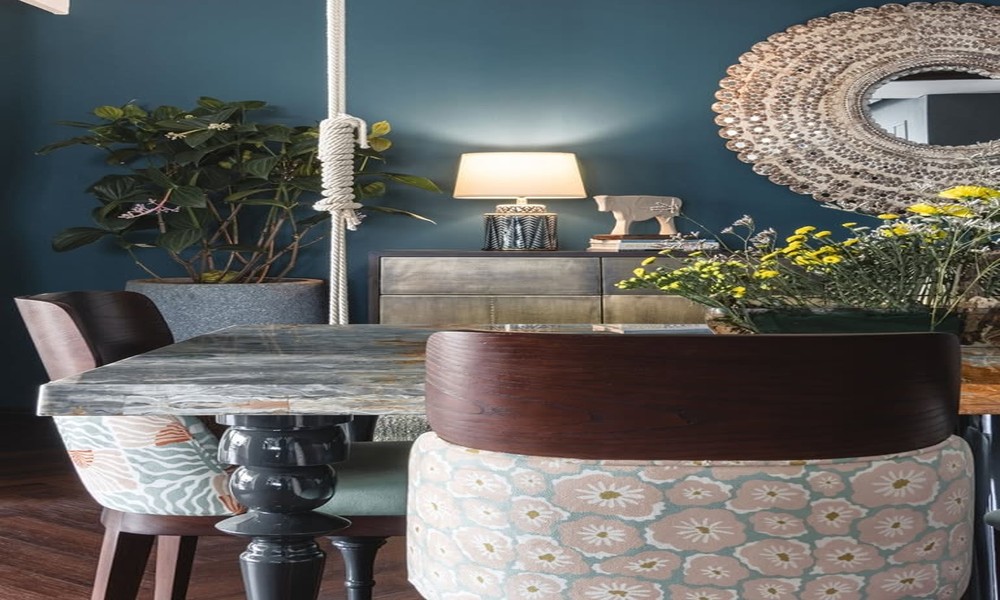
One of the clearest markers of a truly luxurious home today is how gracefully it blurs the line between inside and out. The walls that once firmly separated the living room from the garden are giving way to open, flowing spaces where the boundary almost disappears. Indoor-outdoor living is no longer a feature reserved for holiday villas, it has become a defining ambition of high-end homes, especially in a city like Bangalore where the climate is kind for most of the year. The appeal is simple. A home that opens to the outdoors feels larger, lighter, and more connected to nature, which is exactly the calm that luxury is meant to provide.
For homeowners working with luxury interior designers in Bangalore, the goal is a home where the indoors and outdoors feel like one continuous, considered space.
This guide explores how indoor-outdoor living works in a luxury home, the elements that make it successful, and how to design it so the transition feels effortless.
Key Points at a Glance
- Indoor-outdoor living makes a home feel larger, brighter, and more connected to nature.
- Seamless transitions rely on large openings and continuous flooring.
- Courtyards and gardens bring light and greenery into the heart of the home.
- Outdoor spaces should be designed as comfortable, considered rooms.
- Continuity of materials and palette is what ties it all together.
Seamless Transitions Between Inside and Out
The heart of indoor-outdoor living lies in the transition itself. The most successful homes use large sliding or folding glass doors that open completely, dissolving the wall between a living space and a terrace or garden. When fully open, the two spaces become one, and even when closed, the glass keeps the connection alive by flooding the interior with light and framing the view outside.
The detail that makes this feel truly seamless is continuity underfoot. When the flooring flows from inside to out with little or no visible threshold, the eye reads the two spaces as a single room. A level transition, where the indoor and outdoor floors sit flush, completes the illusion and makes moving between the two feel natural and unbroken.
Bringing the Garden Indoors
Indoor-outdoor living is not only about opening up to the garden, it is also about drawing nature inward. Large windows and glass walls frame greenery like living artwork, while internal planting, a feature plant, a green wall, or a planted atrium, brings the softness of the outdoors into the heart of the home.
This connection to nature is the essence of biophilic design, an approach that has become central to luxury interiors because of how calming and restorative it feels. The presence of greenery, natural light, and natural materials inside a home has a quiet, grounding effect, turning a beautiful space into a genuinely peaceful one.
The Courtyard: Light at the Centre of the Home
Few features capture indoor-outdoor living as completely as a central courtyard. By placing an open or planted courtyard at the core of a home, light and air reach the very centre of the plan, and the rooms around it all open onto a private pocket of greenery. It is an idea with deep roots in Indian architecture, now reimagined for the contemporary luxury home.
A courtyard does something a window never can. It brings the sky into the middle of the house, creates a serene focal point visible from multiple rooms, and offers a sheltered outdoor space that feels completely private. Whether planted with a single sculptural tree or designed as a small garden, it becomes the quiet, beating heart of the home.
[Image suggestion: A central courtyard open to the sky, with a sculptural tree or planting, surrounded by the rooms of the home.]
Designing the Outdoors as a Real Room
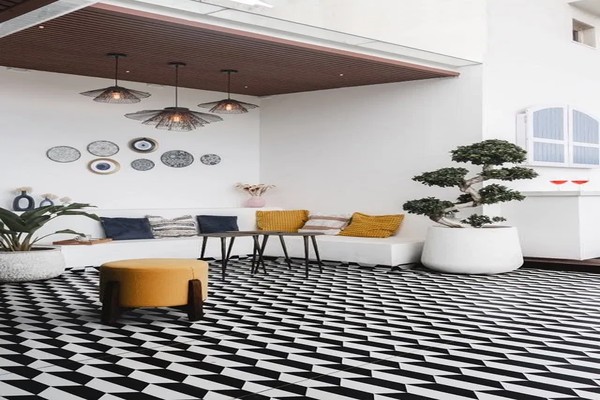
For indoor-outdoor living to work, the outdoor space has to be more than an empty terrace. It should be designed with the same care as any room inside, with comfortable seating, considered lighting, and a clear sense of purpose. A well-designed terrace becomes a genuine extension of the living space, somewhere to relax, dine, and gather rather than simply pass through.
The key is to carry the comfort of the interior outside. Deep, weather-resistant seating, soft textiles, layered lighting for the evening, and a little shade or shelter all make an outdoor space somewhere you actually want to spend time. When the terrace feels as inviting as the living room, the two spaces work together as one continuous home.
Continuity Is Everything
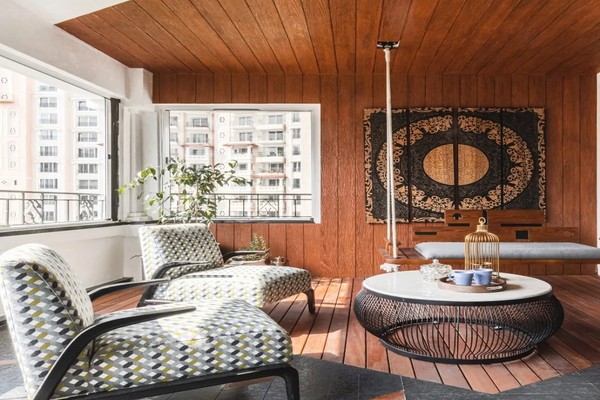
The thread that ties indoor-outdoor living together is continuity. When the materials, colours, and style flow naturally from inside to out, the whole home reads as one coherent space rather than two separate zones stitched together. A stone used on an interior floor that continues onto the terrace, a timber tone echoed in the outdoor furniture, a consistent palette running throughout, these are the choices that make the connection feel intentional.
This is where a designer’s eye is essential. Achieving a seamless flow between interior and exterior takes careful coordination of materials, levels, sightlines, and light, all planned together from the start. When it is done well, the result feels completely natural, as though the home and its surroundings were always meant to be one.
Why Choose Zinoti
Indoor-outdoor living only works when the interiors and the outdoor spaces are designed as a single, coherent vision, and that is exactly how we work. At Zinoti, we plan the inside and the outside of a home together from the very beginning, with more than twelve years of experience and over six hundred completed homes across Bangalore’s finest addresses. Our end-to-end approach means the materials, levels, planting, and light all flow seamlessly between your living spaces and your terraces, courtyards, and gardens.
Working with luxury interior designers in Bangalore means your home feels open, connected, and complete, with the calm of the outdoors woven naturally into everyday living.
In Closing
Indoor-outdoor living represents one of the most desirable directions in luxury home design, offering space, light, and a genuine connection to nature all at once. When the transitions are seamless, the garden is drawn inward, and the outdoor spaces are designed as real rooms, a home feels larger and more serene than its walls alone could ever allow. The secret is continuity, treating the inside and the outside as one considered whole. Done well, it creates a home that breathes, a place where the line between living space and nature simply, beautifully fades away.
