
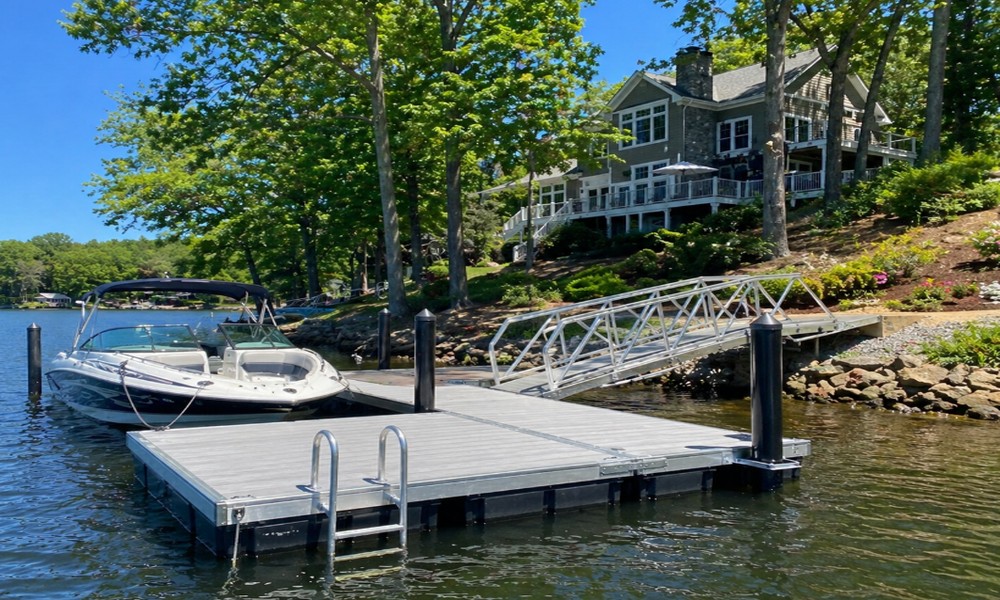
A residential floating dock sounds simple at first. You have a waterfront property, a shoreline, maybe a boat, and you want a safe place to step on and off the water. But once planning starts, a lot of questions come up.
Will the dock stay stable when the water rises? What materials will last the longest? Do you need permits? How will the dock be anchored? And how much will the full project cost once everything is included?
A residential floating dock installation is not just about placing a platform on the water. It is about matching the dock to the shoreline, water depth, boat use, weather exposure, and long-term maintenance needs. Floating docks are popular because they move with changing water levels. This makes them useful for lakes, rivers, tidal areas, and waterfront properties where the water does not stay at one fixed height.
A good dock should feel safe, stable, and easy to use. That usually starts with careful planning before anything is installed. The best residential floating dock is designed around the property, not the other way around.
Key Takeaways
A residential floating dock works well in areas where water levels change.
The shoreline and water conditions matter as much as the dock itself.
Floating dock permits often depend on local shoreline rules, floodplain rules, and waterway regulations.
Dock materials affect cost, maintenance, durability, and comfort.
Aluminum floating docks and modular floating docks are popular because they are durable and flexible.
Anchoring keeps the floating dock in place while still allowing it to move with the water.
Waterfront docks should be planned for safety, access, weather, and long-term use.
What Is Residential Floating Dock Installation?
Residential floating dock installation is the process of planning, anchoring, and installing a floating dock system for home use.
This usually starts with a review of the property. The installer looks at the shoreline, water depth, water movement, access points, and how the dock will be used. From there, the dock design, materials, anchoring method, and connection to land are planned.
A typical residential floating dock installation may include:
- Site review
- Water depth check
- Shoreline inspection
- Floating dock design
- Material selection
- Anchoring plan
- Shoreline connection
- Dock assembly
- Final positioning
- Safety check
A floating dock is more than a deck that sits on water. It needs to handle movement, weather, boat traffic, family use, and seasonal changes. That is why planning matters so much.
Why Choose a Floating Dock Instead of a Fixed Dock?
A floating dock moves with the water. A fixed dock stays at one set height.
This is the main reason many homeowners choose a floating dock. When water levels rise or fall, the dock rises and falls with them. That makes boarding a boat, launching a kayak, or walking onto the dock feel more consistent.
Floating docks are often used for:
- Lakefront homes
- Riverfront homes
- Tidal waterfront properties
- Backyard boat docks
- Areas with seasonal water changes
- Properties where easy access matters
A fixed dock may still work better in some locations. But for many homeowners, a floating dock makes more sense when the water level changes often or when future expansion may be needed.
What Should Be Checked Before Building a Floating Dock?
The site should always be checked before the dock design is finalized.
A floating dock contractor should look at the property first. This helps avoid problems later. A calm pond, a busy river, and an open waterfront with wind exposure all need different dock plans.
Important things to check include:
- Water depth
- Seasonal water changes
- Wave exposure
- Current
- Wind exposure
- Shoreline slope
- Bottom conditions
- Boat size
- Dock use
- Access from land
These details affect the dock layout, anchoring system, material choice, and overall cost. A dock that works well in one location may not work well in another. That is why residential floating dock installation should always begin with the property itself.
What Floating Dock Materials Work Best for Homeowners?
The best floating dock material depends on your water conditions, budget, and maintenance goals.
There is no single best material for every shoreline. Some homeowners want a low-maintenance dock. Some care more about appearance. Others need strength for larger boats or rougher water.
Common floating dock materials include:
- Aluminum
- Wood
- Composite decking
- HDPE floats
- PVC-style surfaces
- Concrete for heavier dock systems
Each material has pros and cons.
Wood has a natural look, but it usually needs more maintenance. Aluminum is lightweight and resists corrosion. Composite decking is popular because it has a clean appearance and does not need as much upkeep as wood. HDPE and PVC-style materials are often used because they resist moisture, rot, and swelling.
Your material choice affects:
- Floating dock cost
- Dock weight
- Maintenance needs
- Durability
- Surface feel
- Heat underfoot
- Repair needs
- Long-term appearance
Many homeowners start by thinking about color or style. That is normal. But it is also important to think about how the dock will hold up after years of sun, rain, waves, and foot traffic.
Are Aluminum Floating Docks a Good Choice?
Yes, aluminum floating docks are a good option for many residential properties.
Aluminum is popular because it is lightweight, strong, and resistant to corrosion. It is often used for dock framing because it holds up well in wet environments and does not have the same rot concerns as wood.
Homeowners often choose aluminum floating docks because they offer:
- Lightweight framing
- Good corrosion resistance
- Long-term durability
- Clean appearance
- Easier modular expansion
- Lower maintenance compared to some materials
That does not mean aluminum needs no care at all. Every dock still needs regular inspection. Hardware, connections, anchoring points, and walking surfaces should be checked throughout the year.
Still, for many homeowners, aluminum is a practical choice because it offers strength without adding too much weight.
What Are Modular Floating Docks?
Modular floating docks are built from sections that connect together.
This makes them flexible. A homeowner may start with a simple dock, then add more sections later. For example, you might add a wider platform, kayak launch, PWC port, or longer walkway after using the dock for a while.
Modular floating docks are helpful because they allow:
- Easier expansion
- Simple layout changes
- Easier transport
- Section replacement
- Custom dock shapes
- Future add-ons
This flexibility is one reason modular floating docks are common for residential use. A dock that feels right today may need to change later. A modular design gives homeowners more room to adjust.
How Is a Floating Dock Anchored?
A floating dock is anchored to keep it in place while still allowing it to move up and down with the water.
Anchoring is one of the most important parts of residential floating dock installation. If the dock is not anchored correctly, it may drift, twist, pull against the shoreline, or wear out faster.
Common floating dock anchoring methods include:
- Shoreline anchors
- Cable anchors
- Chain anchors
- Pilings
- Pile guides
- Anchor plates
The right method depends on the location. A quiet lake may need a different anchoring system than a river with stronger current or a tidal property with shifting water levels.
Good anchoring should keep the dock stable without fighting the natural movement of the water. The dock should rise and fall smoothly while staying aligned with the shoreline.
Do Homeowners Need Floating Dock Permits?
In many cases, yes. Homeowners often need permits before installing a floating dock.
Permit rules depend on the location, type of waterway, shoreline regulations, and floodplain requirements. Some properties may only need local review. Others may involve state or federal agencies, especially if the dock is placed on regulated water.
Possible permit requirements may include:
- Local building review
- Floodplain review
- Shoreline management approval
- Homeowner association approval
- Environmental review
- Waterway or agency approval
Permits may feel slow, but they are important. Starting without the proper approval may lead to delays, fines, removal orders, or expensive changes later.
Before any residential floating dock installation begins, homeowners should check what permits are required in their area.
What Does the Dock Building Process Look Like?
A residential floating dock project usually happens in steps.
The process often looks like this:
- Site visit
- Shoreline and water review
- Floating dock design
- Material selection
- Anchoring plan
- Permit review
- Dock order or fabrication
- Installation
- Final adjustment
- Safety inspection
This order matters. If you choose a dock before reviewing the shoreline, the design may need to change later. A steep shoreline, shallow water, rough waves, or difficult access may all affect the final plan.
A good floating dock project should work backward from the water conditions. The dock should fit the site, not force the site to fit the dock.
How Much Does a Floating Dock Cost?
Floating dock cost depends on size, materials, anchoring, permits, labor, and site conditions.
Two docks may look similar but cost very different amounts. One may be installed on a calm, easy shoreline. Another may need stronger anchoring, permits, a longer gangway, or more labor because access is difficult.
Common cost factors include:
- Dock size
- Dock layout
- Floating dock materials
- Anchoring system
- Shoreline access
- Water depth
- Permit needs
- Labor
- Delivery
- Gangways or ramps
- Accessories like cleats, bumpers, steps, and ladders
A small residential floating dock for light use may cost much less than a larger boat dock built for rougher water. This is why pricing should always be based on the actual property.
How Do You Make a Floating Dock Last Longer?
A floating dock lasts longer when it is designed for the site and maintained regularly.
Some homeowners think only about the first season. The dock looks new. It feels strong. Everything works. But the real test comes after months or years of wind, water movement, sun exposure, storms, and regular use.
To help a dock last longer, plan for:
- Regular hardware checks
- Anchor inspections
- Float inspections
- Surface cleaning
- Seasonal adjustments
- Gangway checks
- Bumper and cleat replacement
- Shoreline connection review
Most of this is simple maintenance. The key is doing it consistently. Small issues are easier to fix before they turn into larger repairs.
What Does Floating Dock Maintenance Include?
Floating dock maintenance includes checking the anchoring, hardware, floats, decking, and connections.
A practical maintenance checklist may include:
- Tighten bolts and nuts
- Check hinges and couplers
- Inspect cables, chains, or piles
- Clean the walking surface
- Look for damaged floats
- Check bumpers and cleats
- Inspect gangway alignment
- Remove debris
- Check after storms or heavy use
Waterfront equipment wears down quietly. You may not notice a problem right away. Then one day the dock feels uneven, moves too much, or rubs against something it should not touch.
That is why maintenance should be part of the plan from the beginning.
Should Homeowners Install a Floating Dock Themselves?
DIY floating dock installation may work for small, simple dock systems in calm water. But many waterfront properties need professional help.
A simple shoreline with shallow, calm water may be easier to handle. But if the site has changing water levels, stronger currents, permit questions, or a larger boat, the project becomes more complicated.
Professional help is usually better when:
- Water levels change often
- Anchoring is difficult
- Permits are unclear
- The dock will support larger boats
- Shoreline access is limited
- The design is custom
- Long-term safety matters
- The water has stronger movement
DIY may save labor costs at first, but mistakes with anchoring, permits, or layout may cost more later. A residential floating dock should feel safe and stable for years, not only during the first few weeks.
What Questions Should Homeowners Ask Before Hiring a Floating Dock Contractor?
Homeowners should ask questions about the site, anchoring, materials, permits, cost, and maintenance.
Good questions include:
- How will this dock work with my shoreline?
- What anchoring method fits this site best?
- What materials make the most sense for my water conditions?
- Do I need permits?
- How will the dock handle water level changes?
- What kind of maintenance should I expect?
- How will the gangway connect to land?
- What future expansion options do I have?
- What affects the final cost?
- How long should the installation process take?
These questions help you understand the full project, not just the dock itself. A residential floating dock should fit your property, your boat, your access needs, and your long-term plans.
Final Thoughts
A residential floating dock installation is more than placing a platform on the water. It is a full system that needs the right design, materials, anchoring, permits, and maintenance plan.
The best dock is not always the biggest or most expensive one. It is the one that fits the shoreline, handles water changes, feels safe to use, and holds up over time.
Before starting, look closely at your property. Think about how the dock will be used now and how it may need to change later. With the right planning, a residential floating dock can make waterfront living easier, safer, and more enjoyable.
FAQs
What is a residential floating dock?
A residential floating dock is a dock system designed for home use. It floats on the water and moves up and down as water levels change.
Do floating docks need permits?
Often, yes. Permit rules depend on local shoreline laws, floodplain rules, waterway regulations, and property location.
Are aluminum floating docks a good choice?
Yes. Aluminum floating docks are popular because they are lightweight, strong, and resistant to corrosion.
What are modular floating docks?
Modular floating docks are dock systems made from connected sections. They are useful because they allow easier expansion and layout changes.
What affects floating dock cost?
Floating dock cost depends on size, materials, anchoring, permits, labor, shoreline access, and added features.
How is a floating dock anchored?
A floating dock may be anchored with shoreline anchors, cables, chains, pilings, pile guides, or anchor plates. The right method depends on the site.
What maintenance does a floating dock need?
Floating dock maintenance includes checking anchors, hardware, floats, decking, gangways, and shoreline connections. Cleaning and storm checks are also important.
Should I hire a professional for floating dock installation?
For simple dock systems, DIY may be possible. For changing water levels, difficult anchoring, permits, or custom layouts, professional installation is usually the safer choice.
This post was written by a professional at Supreme Marine Floating Docks. Supreme Marine Floating Docks is dedicated to providing top-quality floating docks and marine accessories that combine durability, innovation, and superior performance. While we are a new brand, our team brings over 50 years of combined industry experience, making us a trusted name in the marine world. We are passionate about designing and delivering products that meet the highest standards, ensuring reliability and longevity in all marine environments. Whether for residential, commercial, marina docks Ft Lauderdale, our docks are crafted with precision and care, setting a new benchmark in the industry. At Supreme Marine, we don’t just build docks-we create lasting solutions.
